

Why the real challenge for security companies lies in restructuring their human resources, redefining organisational capabilities and protecting returns on investment.
An HR management perspective on organisational transformation, workforce productivity and protecting return on investment.
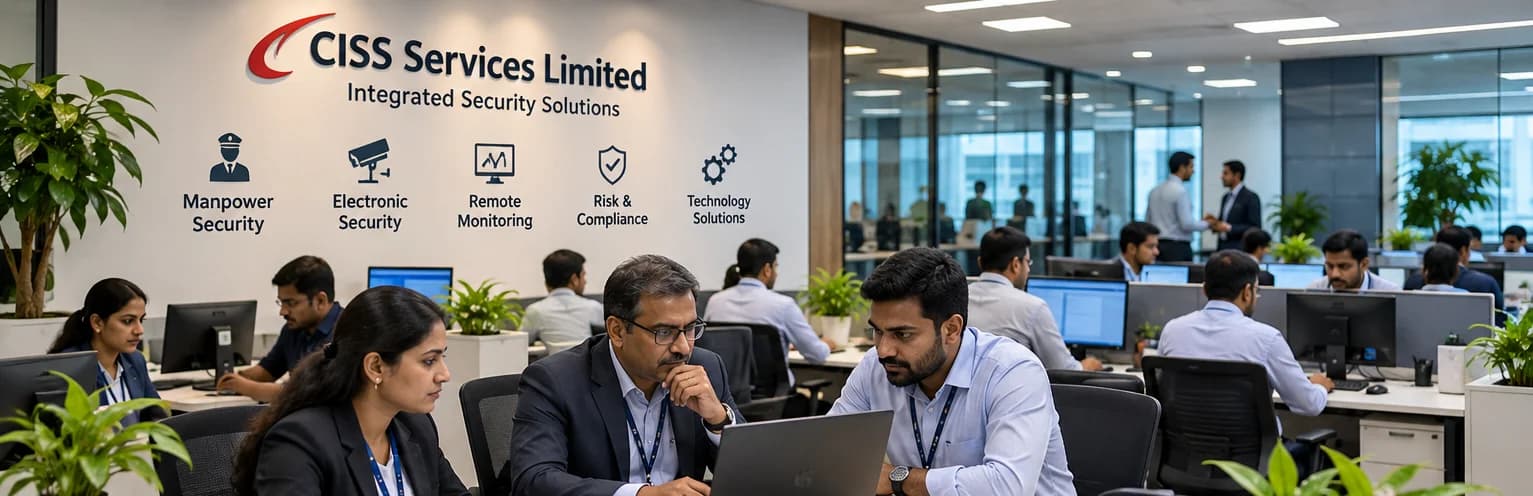
Artificial Intelligence is challenging a fundamental assumption of India's private security industry, that business growth must be accompanied by proportional growth in human resources. Traditionally, security companies have built their management, HR, administration and supervisory structures around large manpower deployments. As AI-enabled surveillance, intelligent monitoring and automated processes reshape service delivery, the implications extend beyond technology.
The critical challenge is whether existing human capital structures, competencies and costs can remain commercially sustainable as business models evolve.
Changing Relationship Between Human Capital and Revenue
Corporate staffing in private security companies has historically expanded alongside manpower deployment and contract volumes. AI is beginning to weaken this relationship. As clients adopt technology-enabled security solutions, conventional deployment requirements may change, while administrative and supervisory functions become increasingly automated. Companies risk maintaining organisational structures designed for an earlier business model, creating disproportionate overheads and declining employee productivity. Conversely, AI-assisted recruitment, payroll, compliance, reporting and workforce management can improve efficiency without corresponding increases in staffing. Management must therefore align human capital investment with changing revenue composition, rather than simply pursue headcount reduction.
Skills Obsolescence and Emerging Competencies
The transformation will alter established corporate roles. Routine administration, documentation and coordination may require less human intervention, while demand increases for expertise in intelligent security systems, analytics, cybersecurity, integrated operations and technology-led business development. Organisations may consequently experience surplus capacity in traditional functions alongside shortages of specialised talent. This imbalance can increase costs through external recruitment, duplicated roles and prolonged training.
For Management, the priority must be identifying future competencies, reskilling existing employees and creating credible career pathways. The greatest HR risk is not redundancy alone, but the growing mismatch between current skills and future business requirements.
Human Capital Productivity and Return on Investment
AI adoption must ultimately justify its financial returns. Human capital performance should be assessed through productivity, contribution margins, administrative cost per contract, competency utilisation and revenue generated per employee. However, revenue per employee alone can be misleading when business shifts from manpower billing towards technology services. Similarly, indiscriminate staffing reductions may weaken client relationships, compliance and operational control. Investment assessments must include technology expenditure, employee training, restructuring costs, retention and incremental business contribution.
The objective is to maximise the economic value generated by employees, not merely minimise employment expenditure. Protecting ROI requires measuring the combined productivity of people, processes and technology.
Organisational Restructuring and Leadership
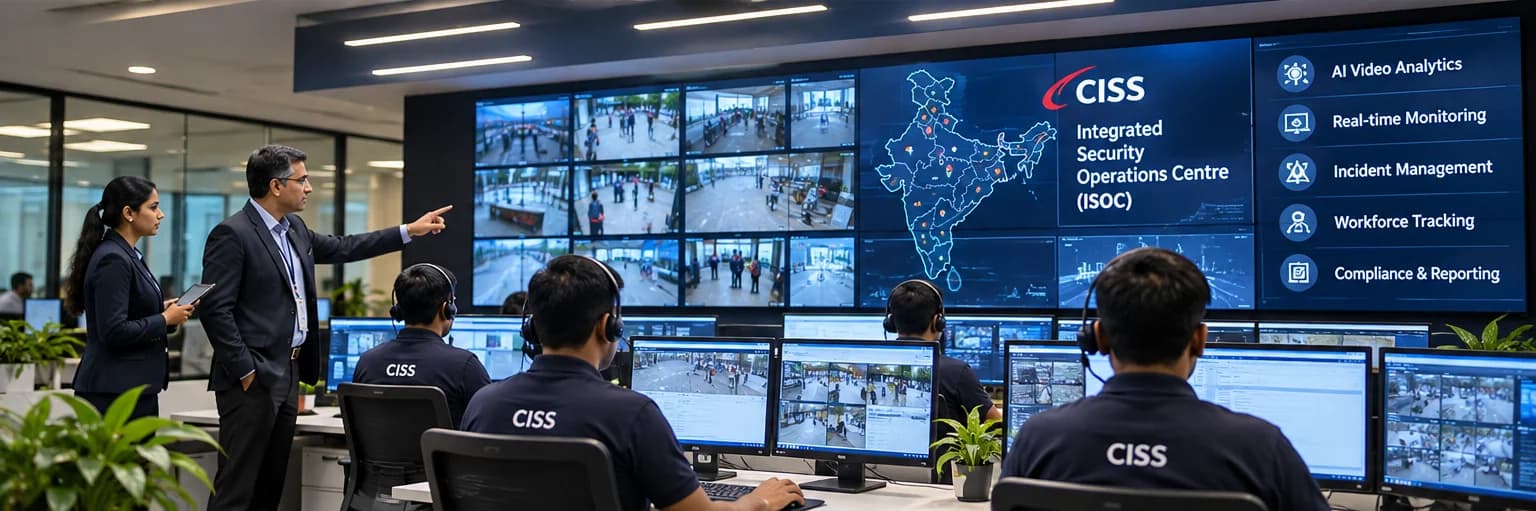
AI-enabled dashboards, automated reporting and integrated monitoring can transform traditional supervisory hierarchies. Organisations may require fewer routine coordination activities but stronger analytical, technical and commercial capabilities. However, experienced employees possess institutional knowledge and customer relationships that technology cannot readily replace. Premature restructuring risks destroying valuable organisational capital, while delayed transformation perpetuates inefficiency.
Management must distinguish between functions suitable for automation, roles requiring technological augmentation and responsibilities demanding human judgement. Modernising technology without redesigning organisational structures risks maintaining two costly operating models simultaneously.
Governance, Employee Confidence and Transformation Risks
Technological change also introduces risks involving employee uncertainty, algorithmic performance assessment, privacy, cybersecurity and organisational resistance. Inadequate training or poorly managed restructuring can undermine anticipated financial benefits. Transparent communication, fair employment practices, human oversight and structured transition programmes are therefore essential. HR must work alongside finance, operations and technology leadership to ensure AI adoption strengthens organisational capability without compromising accountability or employee confidence.
The Strategic Imperative
The future security enterprise must shift from managing headcount towards managing human capital value. Workforce planning should reflect evolving business complexity, technological capabilities and sustainable profitability. Periodic skills assessments, targeted reskilling, selective recruitment and measurable productivity benchmarks must become integral to corporate strategy.
Ultimately, successful AI adoption will not be measured by how effectively organisations convert their combined investment in people and technology into sustainable business value.
Confidentiality & Disclaimer
This article presents the author's independent professional perspectives on the evolving impact of Artificial Intelligence on human capital and business economics in India's private security industry. The observations are intended for industry discussion, management awareness and strategic consideration. They do not necessarily represent the official policies or positions of CISS Services Limited. No confidential corporate, client, employee or commercially sensitive information is disclosed. The analysis is general in nature and should not be construed as legal, financial or regulatory advice.
About the author
Commander Satyajit Roy (Retd.), Indian Navy
CISM | CSP | CSM | CSDP
Head – ManTech & Electronic Security Systems (ESS), CISS Services Limited
Commander Satyajit Roy is a veteran Naval Aviator, security strategist and management professional with extensive experience spanning defence, corporate security, technology integration and strategic project management. An alumnus of the National Defence Academy, he holds professional qualifications including CISM, CSP, CSM and CSDP, with specialised training in security management, information security, risk management and cybercrime intervention.
He currently heads ManTech & Electronic Security Systems (ESS) at CISS Services Limited, focusing on integrated security solutions, emerging technologies, operational transformation and sustainable business development.