
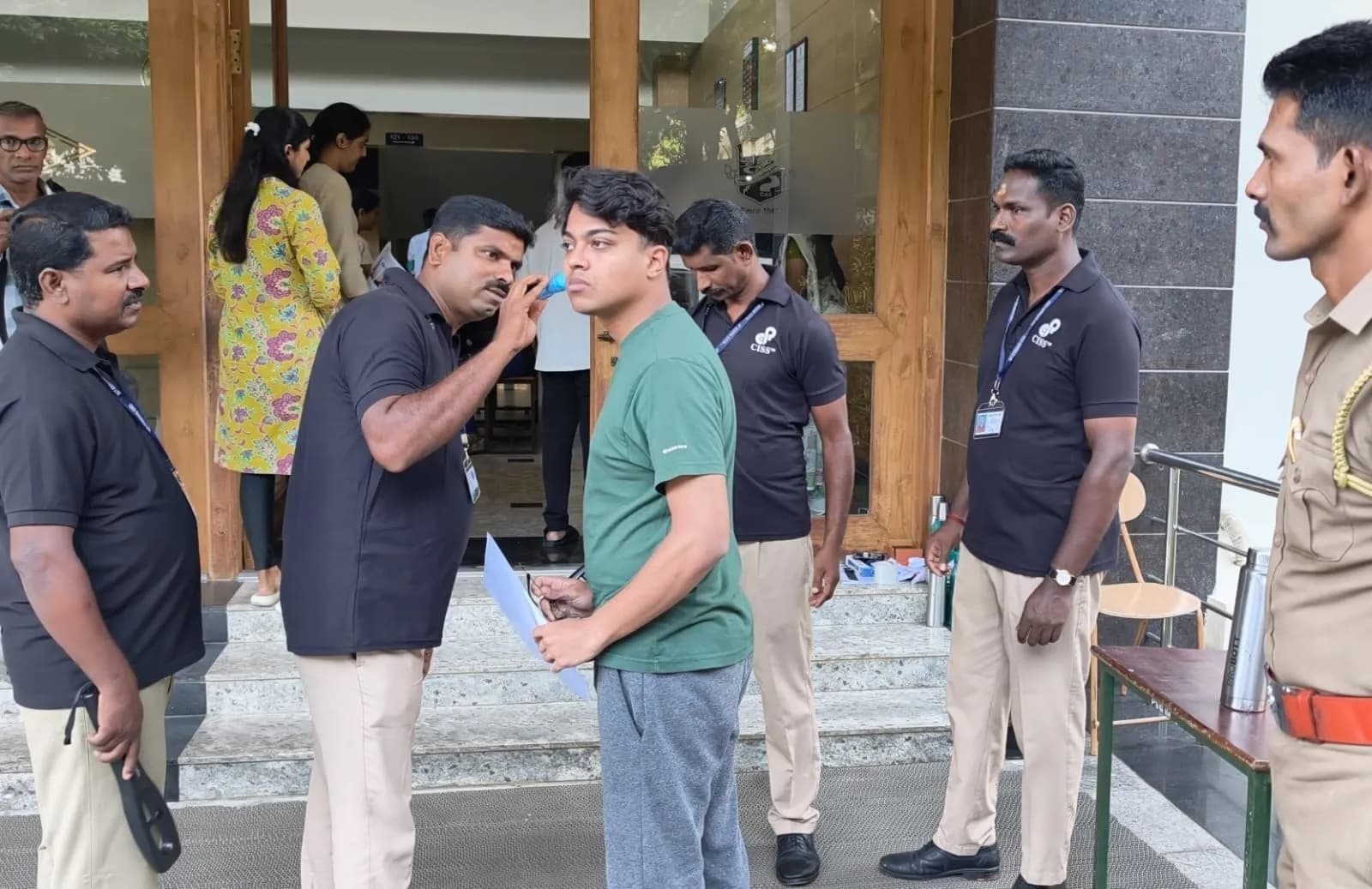
CISS Services Ltd deployed 2,293 security personnel across 10 states for the NEET examination, with zero deployment shortfall. Every sanctioned post was filled, on time, on the day.
- 0
- Personnel deployed
- 0
- States covered
- 0
- Deployment shortfall
Why an examination is a different kind of security problem
Most guarding contracts are continuous. A plant, a bank branch or a corporate campus is protected around the clock, and a gap in one shift can be covered by the next. An examination has none of that forgiveness.
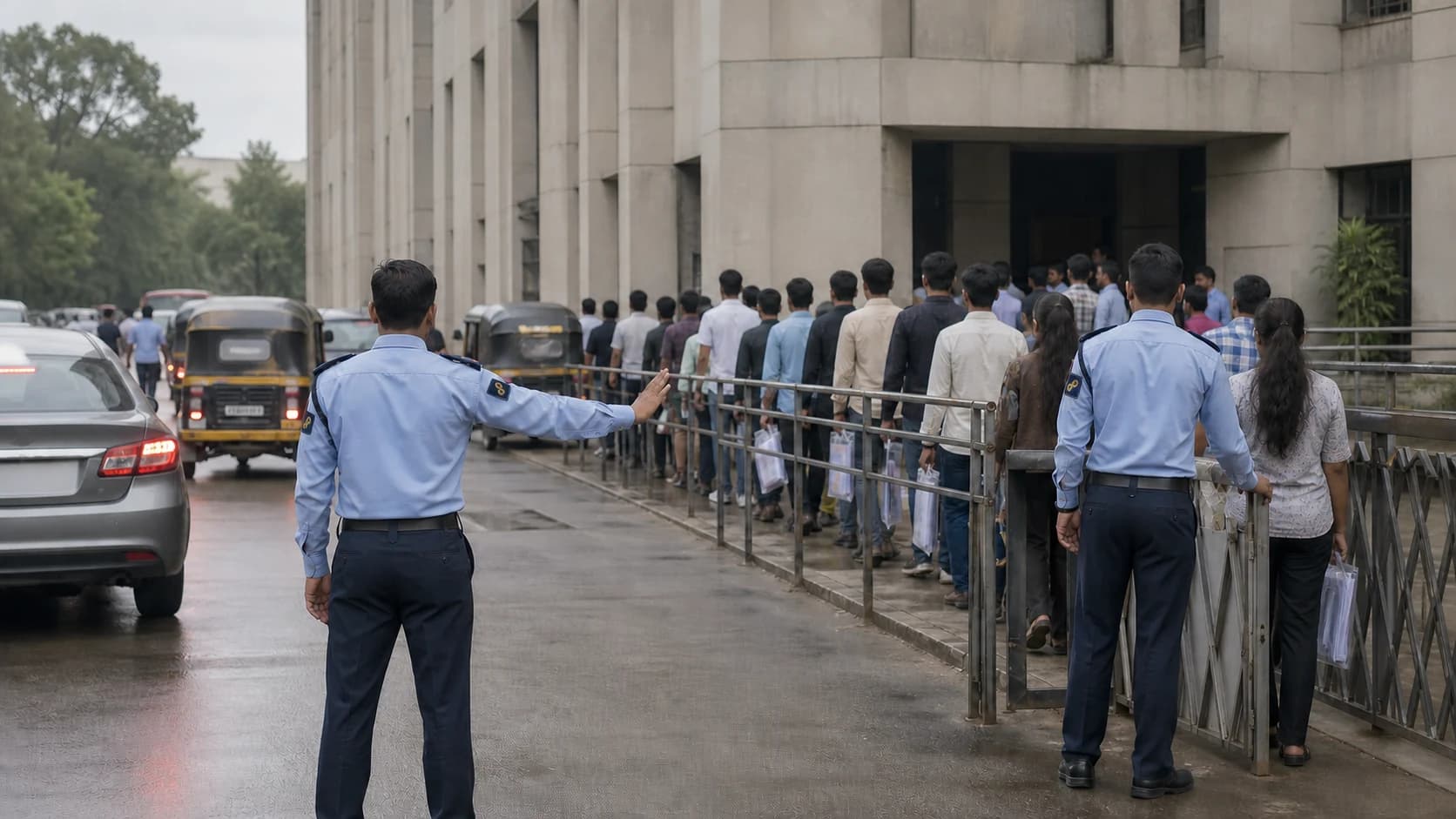
It happens once. It begins at a fixed hour, at hundreds of separate addresses, on the same morning. Candidates arrive in a compressed window, most of them young, many travelling from another district, all of them carrying the weight of a year's preparation. A centre that is short of personnel at 07:00 cannot be made whole at 09:00 — by then the gate has already been the bottleneck, the queue has already formed on a public road, and the failure is on record.
That is why examination duty is judged on a single unforgiving measure rather than on effort.
What “zero shortfall” actually measures
Shortfall is the difference between the manpower a client has sanctioned and the manpower that physically reports, verified and in uniform, at the post it was assigned to. It is not a measure of how many people were rostered. It is a measure of how many turned up in the right place.
Zero shortfall across 2,293 posts and ten states therefore says something quite specific. It says the roster was built with cover in depth rather than to the exact number; that every person on it was verified and licensed before the day; that reporting was confirmed post by post rather than assumed; and that the replacements were already moving before anyone needed to ask for them.
Zero shortfall is not a manpower result. It is a planning result that happens to be measured in people.
Ten states, one morning
Scale is the easy part to describe and the hard part to deliver. Ten states means ten regulatory environments, ten sets of local licensing and wage compliance, ten sets of travel realities, and ten branch teams who each have to solve the same problem in their own geography on the same date.
CISS holds PSARA licences across 30 states and 6 union territories and operates through a national branch network, which is what makes a deployment of this shape possible at all — the personnel are drawn from established local strength rather than assembled for the occasion. Specialised guarding capacity, verified through background verification and standing rosters, is the asset that gets spent on a day like this.
| Sl. | State / union territory | Count |
|---|---|---|
| 1 | Tamil Nadu | 904 |
| 2 | Kerala | 570 |
| 3 | Gujarat | 361 |
| 4 | Punjab | 140 |
| 5 | Jammu & Kashmir | 91 |
| 6 | Jharkhand | 75 |
| 7 | Uttarakhand | 60 |
| 8 | Bangalore | 44 |
| 9 | Andhra Pradesh | 28 |
| 10 | Puducherry | 20 |
| Total | 2,293 |
Inside the centre
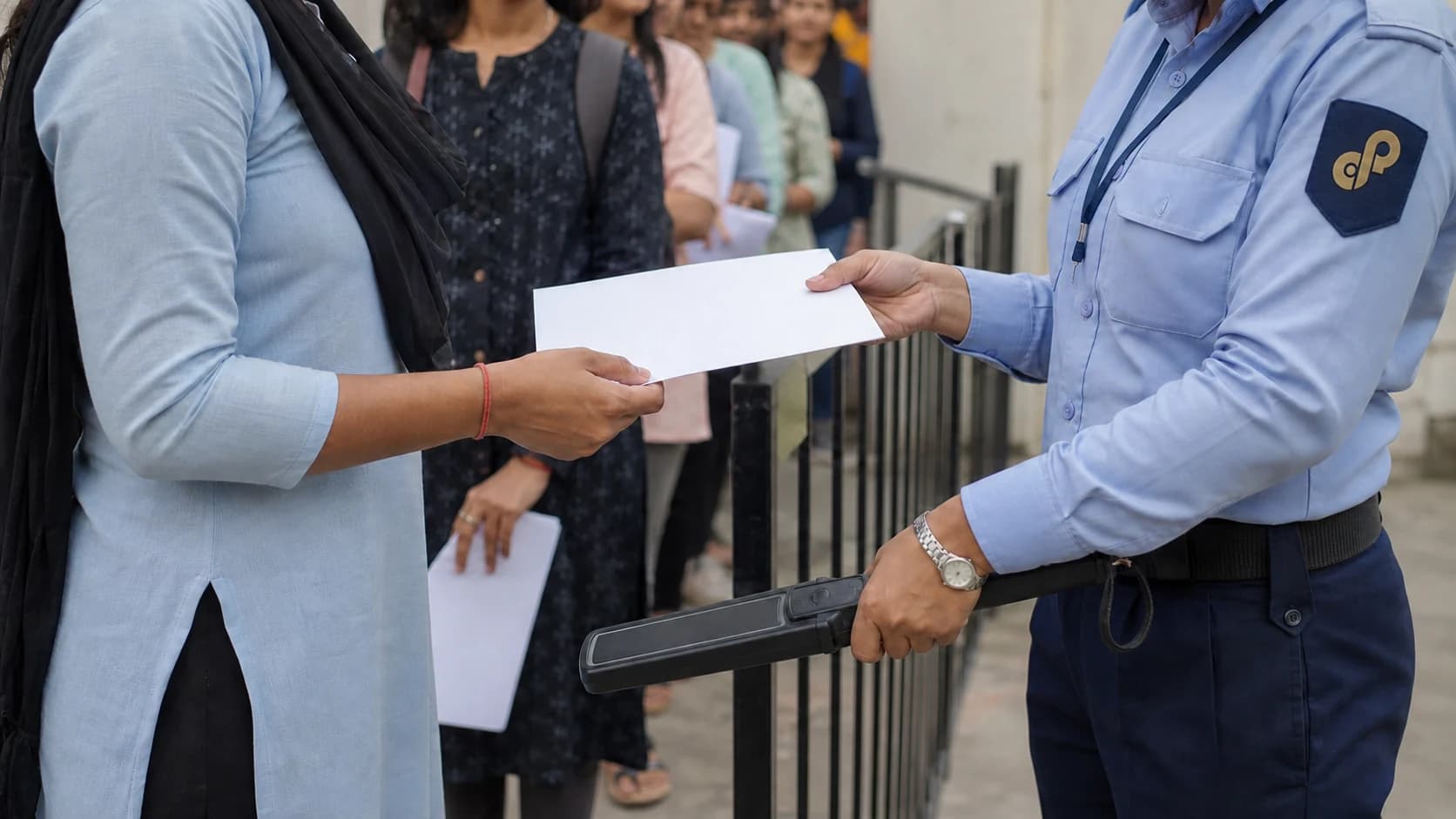
The duty itself is more varied than “guarding a gate”. A typical examination deployment has to cover queue formation and crowd build-up before doors open; identity and admit-card checking at the entrance; prohibited-items screening; separate provision and women personnel for female candidates; escort and support for invigilating staff and question-paper movement; a kept-clear medical and emergency lane; vehicle marshalling and parking for accompanying family; and then the hardest twenty minutes of the day — simultaneous dispersal, when several hundred people leave one building at once.
Each of those is a discipline CISS runs as a standing service rather than an improvisation: parking and traffic flow management, event security, and first-aid trained personnel on site.
The reporting layer
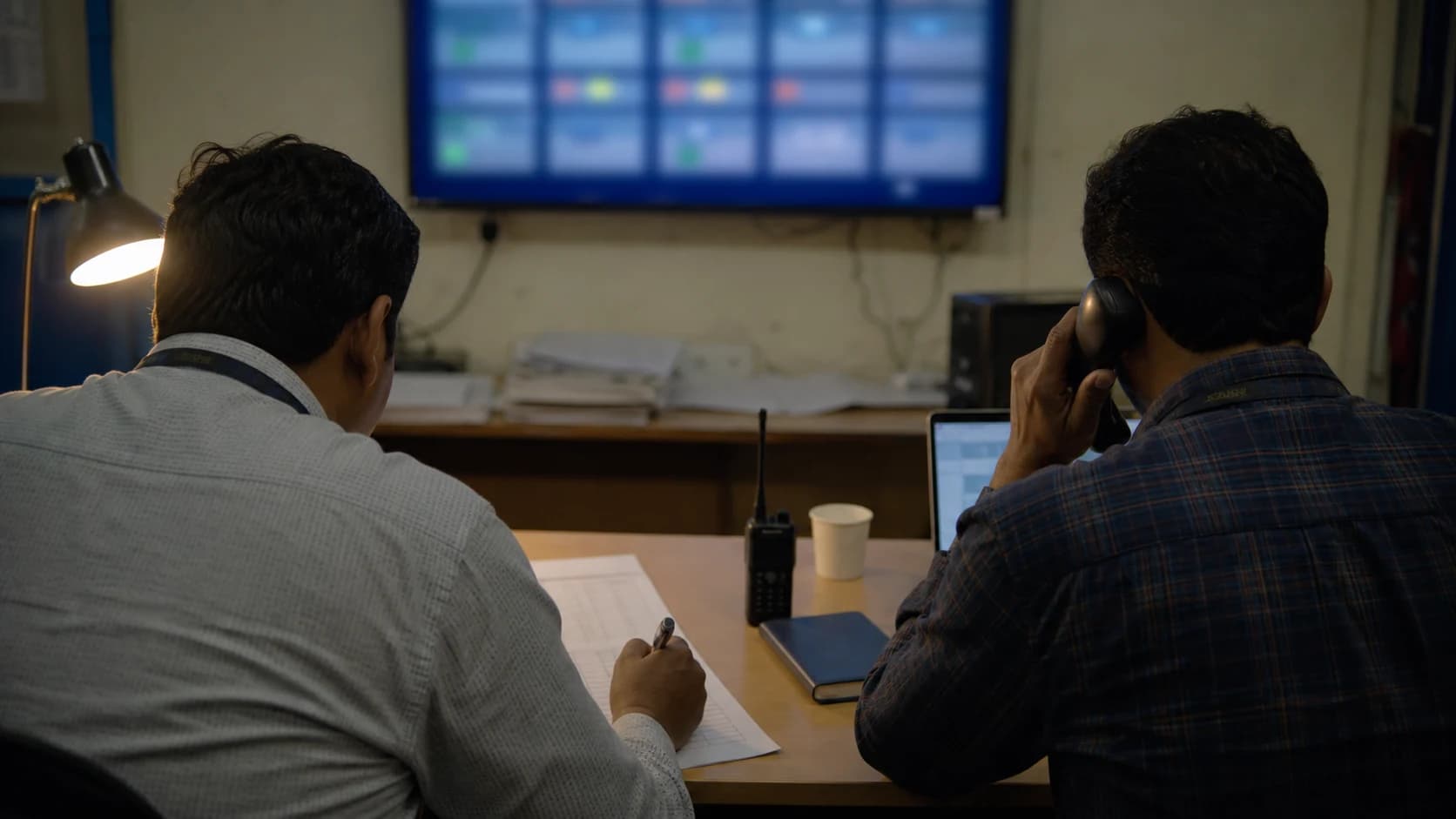
At this scale, the operational risk is not that a post is empty — it is that a post is empty and nobody knows for ninety minutes. What separates a controlled deployment from a hopeful one is the speed and honesty of reporting from the field: attendance confirmed at the post rather than at the branch, exceptions escalated immediately, and a live picture at the operations desk while there is still time to act on it.
This is the ground that CISS's AMS intelligent field-force management and digital reporting systems are built for — man–technology integration applied to the least glamorous and most decisive part of the job.
Where this capability travels
An examination is a useful proving ground because it compresses every hard variable into one morning: fixed time, dispersed sites, large public volumes, zero tolerance for a gap. The same discipline is what recruitment drives, results days, election duties, public examinations and large civic events all require.
If your organisation has a deployment with a hard date and no second chance, talk to our team.
Our thanks to every Field Officer, Operations coordinator and guard on duty for the execution and for the support behind it. Congratulations to the entire team.